400-Foot Self-Elevating Offshore Platform
400-Foot Self-Elevating Offshore Platform Qingzhou Yakai Dredging Machinery Manufacturing Co., Ltd.
400-Foot Self-Elevating Offshore Platform
400-Foot Self-Elevating Offshore Platform Qingzhou Yakai Dredging Machinery Manufacturing Co., Ltd. is a professional manufacturer specializing in the research, development and production of high-standard offshore engineering equipment and marine service facilities.https://ykdredging.com/
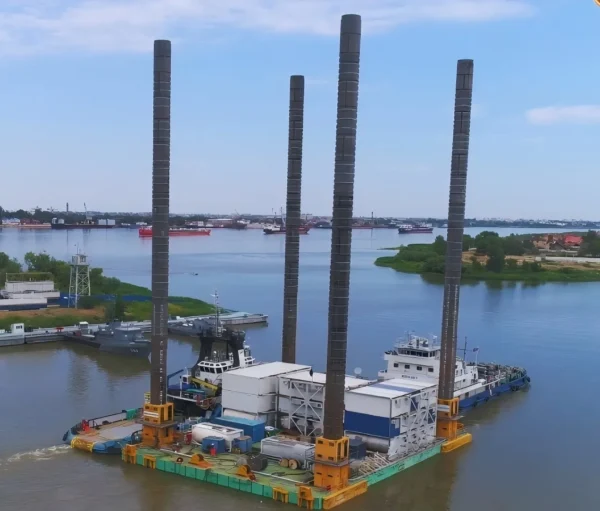
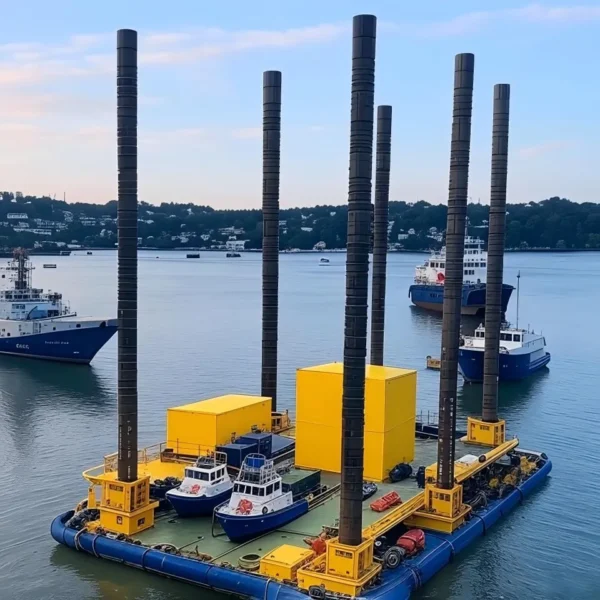
Our upgraded 400-Foot Self-Elevating Offshore Platform is a large-scale, intelligent core device for offshore engineering, independently developed for medium and shallow sea operation scenarios. Featuring overall dimensions of 122m × 38m × 16m and a total weight of 3200 tons, this self-elevating platform serves as ideal professional equipment for offshore wind power construction, marine geological exploration, offshore equipment installation and maintenance, offshore oil and gas auxiliary operations, and various large-scale offshore engineering projects.https://vt.tiktok.com/ZSHb8HWXu/
Adopting an integrated all-steel welded box-type structure, the platform delivers ultra-stable navigation and positioning performance, dual operation modes of fully automatic hydraulic lifting and intelligent control, low energy consumption and zero secondary pollution. With a maximum variable load of 850 tons, a 42-meter leg lifting stroke and 30-day continuous offshore operation capacity, it perfectly adapts to long-term, fixed-point and high-load construction in offshore wind farms, open-sea survey areas, coastal deep-water zones and comprehensive marine operation waters.
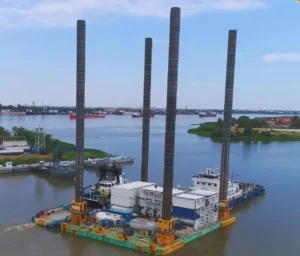
Balancing ultra-large load capacity and flexible site adaptability, the 400-foot self-elevating offshore platform covers diverse full-scene offshore functions with lower unit engineering costs.
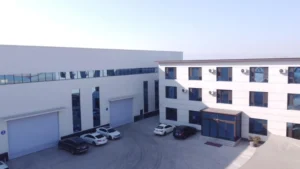
It effectively makes up for the market gaps of limited load capacity of small offshore platforms and high costs and poor nearshore flexibility of oversized deep-sea platforms, becoming a cost-effective universal choice for global offshore wind projects, marine resource exploration, coastal deep-water construction and marine ecological monitoring.
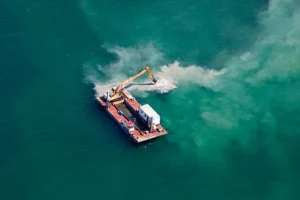
Core Structure & Working Principle
The 400-Foot Self-Elevating Offshore Platform is constructed with thickened high-strength marine steel plates and processed with five-layer high-grade anti-rust and salt-fog anti-corrosion coating, enabling long-term stable operation in harsh marine environments such as open-sea wind farms, deep-water coastal zones and perennial salt-fog sea areas.
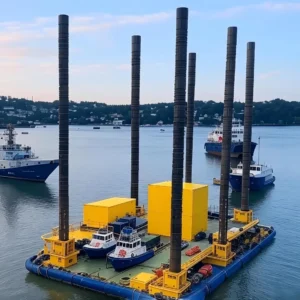
The complete equipment consists of four-corner heavy-duty self-elevating leg systems, full-hydraulic synchronous lifting power units, a large-area load-bearing operation deck, an intelligent integrated positioning control console and wave-resistant structural components. Optimized exclusively for medium and shallow sea working conditions, it supports 360° flexible positioning, excellent wind and wave resistance, and integrated functions of offshore construction, equipment maintenance, geological exploration and marine environmental monitoring. The upgraded synchronous hydraulic lifting system ensures stable heavy-duty lifting and precise positioning of four legs without structural deviation in fluctuating wave environments. The optimized anti-seismic and anti-wave leg structure thoroughly solves common problems such as platform shaking, leg corrosion and unstable positioning in complex sea conditions. All core components are manufactured in strict accordance with international offshore engineering standards, featuring ultra-low failure rates and simple daily maintenance for long-term high-load continuous operation.
1. Platform Hull & Load-Bearing Mechanism
Equipped with an anti-collision heavy-duty box-type hull and high-rigidity large-area bearing deck, the 400-Foot Self-Elevating Offshore Platform is tailor-made for long-term fixed-point high-load operation in medium and shallow seas. The integrated one-piece reinforced full-welding structure with optimized stress design greatly enhances overall rigidity and anti-deformation performance. The sealed floating buoyancy cabin provides excellent stability, anti-sinking capacity and super-large load-bearing performance. Adaptable to offshore wind farms, coastal deep-water engineering zones, open-sea exploration waters and nearshore maintenance areas, the platform realizes full-coverage and dead-angle-free multi-functional offshore operation. Compared with small offshore platforms with insufficient load capacity and oversized deep-sea platforms with high costs and poor medium-shallow sea adaptability, our product boasts upgraded load performance, structural stability and all-scene adaptability, achieving higher fine construction efficiency and superior cost performance in medium and shallow sea engineering projects.
2. Self-Elevating Lifting & Positioning System
The core lifting and positioning system of the 400-Foot Self-Elevating Offshore Platform is customized for medium-shallow sea high-load long-term operation, offshore construction and marine resource exploration. Equipped with a high-power synchronous hydraulic lifting system and four-corner anti-slip reinforced positioning legs, the platform can freely adjust elevation according to water depth and wave conditions, realizing automatic stable lifting, fixed-point locking and long-term load-bearing operation in complex marine environments. The 42-meter ultra-long lifting stroke extends the adaptive water depth range, perfectly fitting variable-depth medium and shallow sea operation scenarios. The upgraded anti-corrosion and anti-slip leg structure effectively prevents slipping, rusting and positioning instability during uninterrupted high-load work. The full-range locking design eliminates safety hazards caused by wave fluctuation and tidal changes, fully meeting the long-term fixed-point construction demands of offshore wind power and open-sea engineering projects and greatly improving overall operation stability and bearing capacity.
3. Hydraulic Power & Intelligent Control System
The platform adopts an upgraded full-hydraulic intelligent heavy-duty control system, matched with low-energy high-power marine diesel generator sets and large-load hydraulic integrated power units, fully adapting to long-term high-load offshore operation in medium and shallow seas. Different from low-power small offshore equipment and high-energy-consumption oversized deep-sea devices, it features synchronous hydraulic output and intelligent frequency conversion regulation, supporting stepless lifting speed adjustment, precise positioning locking and automatic wave avoidance adaptation. The integrated centralized control console integrates all core functions, enabling one-key operation of lifting, elevation adjustment, positioning locking and equipment status monitoring. Supporting dual modes of full-automatic intelligent control and manual auxiliary adjustment, the system solves the pain points of insufficient load of small equipment and poor medium-shallow sea adaptability of large deep-sea platforms, realizing intelligent, efficient and refined offshore engineering operation.
4. Auxiliary Configuration & Expansion Function
The 400-Foot Self-Elevating Offshore Platform supports flexible configuration of professional auxiliary equipment according to actual sea conditions and engineering demands, including large-tonnage marine cranes, offshore wind power maintenance modules, high-precision geological exploration devices, long-distance high-brightness marine lighting systems and wireless intelligent remote monitoring modules. Standardized reserved mounting holes and modular installation areas on the deck allow free assembly and disassembly of various auxiliary equipment, realizing seamless switching between offshore construction, geological exploration, equipment maintenance and marine environmental monitoring. Featuring a low and standardized operation threshold, the platform can be proficiently operated by professional staff after simple training. Each finished platform is equipped with complete supporting accessories and detailed operation and maintenance manuals, helping global customers quickly launch stable long-term offshore engineering services.
5. Optional Auxiliary System
To meet diversified high-load long-term operation demands, we provide premium optional configurations for the 400-Foot Self-Elevating Offshore Platform, including automatic hydraulic synchronous lifting optimization systems, wireless remote monitoring modules, long-distance marine lighting devices, rotary marine cranes, high-precision marine meteorological sensors and enhanced salt-fog anti-corrosion coatings. These customized configurations enable intelligent, standardized and efficient multi-functional operation in various complex medium and shallow sea environments.
Detailed Technical Specification Table
|
Parameter Category
|
Specification Details
|
Unit
|
Standard Parameters (400-Foot Self-Elevating Offshore Platform)
|
|
Basic Information
|
Equipment Type
|
—
|
400-Foot Self-Elevating Offshore Platform (Medium-Shallow Sea High-Load Intelligent Offshore Engineering Platform)
|
|
Main Purpose
|
—
|
Offshore Wind Power Foundation Construction, Open Sea Geological Exploration & Sampling, Offshore Equipment Installation & Maintenance, Offshore Oil & Gas Field Auxiliary Operation, Coastal Deep-Water Engineering Construction, Marine Environmental Monitoring
|
|
|
Platform Material
|
—
|
High-Strength Marine Special Steel, Integral Reinforced Full Welding, Five-Layer Upgraded Salt-Fog Anti-Corrosion Coating
|
|
|
Overall Platform Dimension
|
m
|
122(L) × 38(W) × 16(H)
|
|
|
Total Equipment Weight
|
t
|
3200
|
|
|
Working Performance (400-Foot Specific)
|
Maximum Variable Load
|
t
|
850
|
|
Leg Lifting Stroke
|
m
|
42
|
|
|
Continuous Offshore Operation Time
|
d
|
30
|
|
|
Adaptable Water Depth Range
|
m
|
5-38
|
|
|
Operation Mode
|
—
|
Full-Automatic Hydraulic Lifting + Manual Auxiliary Dual Mode (Wireless Remote Monitoring Optional)
|
|
|
Max Allowable Wave Height
|
m
|
6.5
|
|
|
Structural Parameter
|
Deck Operation Area
|
㎡
|
4200
|
|
Lifting Mode
|
—
|
Four-Corner Synchronous Hydraulic Self-Elevating Lifting
|
|
|
Adaptability Parameter
|
Applicable Sea Area
|
—
|
Offshore Wind Farms, Coastal Deep-Water Zones, Open Sea Exploration Waters, Nearshore Maintenance Waters, Medium-Shallow Sea Comprehensive Operation Areas
|
|
Wind Resistance Level
|
Level
|
Level 12 Stable Operation
|
|
|
Durability & Operation
|
Corrosion & Salt-Fog Resistance
|
—
|
Five-Layer Marine Salt-Fog Anti-Corrosion Coating, Stainless Steel Reinforced Structure, Anti-Seismic & Anti-Wave Heavy-Duty Design
|
|
Long-Term Operation Cycle
|
d
|
360 Days Continuous Stable Operation
|
|
|
Service Life
|
Year
|
35+ Years
|
|
|
Certification & Warranty
|
Implementation Standard
|
—
|
ISO9001, International Offshore Engineering Specification, CCS Marine Certification, CE Certification
|
|
Warranty Period
|
Month
|
12 Months Full-Machine Warranty, 36 Months Warranty for Hull & Hydraulic Lifting System
|
Core Technical Advantages of 400-Foot Self-Elevating Offshore Platform
1. Factory Direct Sales & High Cost Performance
As a professional integrated manufacturer of offshore engineering equipment, Qingzhou Yakai Dredging Machinery provides direct sales services without intermediate agents and price markups, delivering cost-effective 400-Foot Self-Elevating Offshore Platform to global engineering enterprises. Compared with high-cost, high-energy-consumption deep-sea platforms with poor medium-shallow sea adaptability and low-efficiency small offshore equipment, our product integrates full-scene operation functions, rapid marine deployment capability and ultra-low unit operation costs. It effectively reduces labor and time costs for offshore projects, improves refined construction quality, and maximizes economic benefits for clients.
2. High-Rigidity Structure & Superior Sea Condition Adaptability
Adopting an optimized high-rigidity box-type reinforced structure and four-corner synchronous locking lifting system, the platform operates stably under level 12 strong winds and 6.5m huge waves. It adapts to variable water depths of 5m to 38m, covering all conventional medium and shallow sea engineering scenarios. The modular integrated design supports integral floating transportation and cross-sea rapid deployment without large hoisting equipment, realizing fast entry and high-efficiency heavy-load operation in complex marine environments, balancing ultra-high load capacity and flexible sea condition adaptability.
3. Dual Intelligent Modes & High Operation Efficiency
Equipped with a full-hydraulic intelligent control system, the platform supports dual operation modes of automatic intelligent lifting positioning and manual precise adjustment. It realizes one-key completion of offshore construction, equipment maintenance, geological exploration and environmental monitoring. The 42m ultra-long lifting stroke and 850-ton large load capacity boost project efficiency dozens of times higher than traditional small offshore equipment. The upgraded anti-seismic and anti-wave leg structure eliminates shaking, corrosion and positioning instability, ensuring continuous stable heavy-load operation in harsh open-sea wind farm and deep-water environments.
4. Upgraded Anti-Corrosion Design & Low Maintenance Cost
The whole hull is made of high-strength special marine steel and covered with five-layer high-performance salt-fog anti-corrosion coating, resisting long-term marine salt erosion, dry-wet alternation and seawater medium corrosion. Core lifting and positioning parts adopt thickened stainless steel reinforced structures, featuring high strength, wear resistance and rust resistance. The integrated full-welding process eliminates structural gaps and water leakage risks, reducing structural fatigue and navigation wear. Compared with ordinary offshore equipment, its overall stability is increased by 400%, with a greatly extended service life and lower daily maintenance and replacement costs.
5. Humanized Intelligent Design & Low Operation Threshold
The integrated centralized control layout features intuitive buttons and one-key intelligent start, supporting free switching between automatic intelligent operation and manual auxiliary control. Professional operators can master full operation and debugging skills after standardized training. Users can accurately adjust platform elevation, lifting speed and positioning state according to actual sea conditions and engineering needs, realizing targeted refined construction for complex offshore scenarios. With ultra-low energy consumption and zero secondary pollution, the platform adopts pure physical operation without damaging marine ecology. We provide free on-site commissioning and complete after-sales operation tutorials for all clients.
6. Diversified Expansion & Customized Configuration
With rich offshore equipment manufacturing experience, we provide personalized one-stop customized solutions for the 400-Foot Self-Elevating Offshore Platform. Clients can flexibly configure large-tonnage marine cranes, enhanced wind-resistant structures, long-distance remote monitoring systems, marine meteorological detection modules and high-precision geological exploration equipment according to sea conditions and operation demands, making the platform fully adaptable to various complex medium and shallow sea offshore engineering and marine service scenarios.
Typical Application Scenarios
1. Offshore Wind Power Construction
Specially developed for long-term high-load construction and maintenance of offshore wind farms, the 400-Foot Self-Elevating Offshore Platform operates stably in complex open-sea wind farm environments where small equipment cannot work. It efficiently completes wind power foundation construction, equipment installation and daily maintenance, avoiding safety hazards caused by wave fluctuation and wind impact. With strong full-sea adaptability, large-load integrated performance and eco-friendly operation, it has become the core high-efficiency equipment for global offshore wind power engineering projects.
2. Coastal Deep-Water Engineering Construction
Widely applied to coastal deep-water infrastructure construction, port expansion and marine reclamation projects, the platform supports fixed-point bearing and construction support in deep-water sea areas. Its high-rigidity stable design is free from tidal and wave interference, enabling long-term stable fixed-point operation. It effectively improves construction accuracy and efficiency, eliminates safety risks caused by unstable operation platforms, and is widely recognized by marine engineering enterprises for long-term offshore supporting operations.
3. Marine Geological Exploration & Resource Survey
The platform solves the industry pain points of unstable operation and limited exploration range of small detection equipment in complex open-sea conditions. Long-term fixed-point stable bearing operation improves the accuracy of marine geological sampling and resource detection, reducing data errors caused by platform shaking. With wide water depth adaptability and strong wind and wave resistance, it supports efficient, safe and long-term geological exploration in various medium and shallow sea areas, providing reliable data support for marine resource development and engineering site selection.
4. Offshore Oil & Gas Auxiliary Operation
Suitable for daily equipment maintenance, auxiliary construction and environmental monitoring of medium-shallow sea offshore oil and gas fields, the platform replaces low-efficiency mobile equipment and small auxiliary platforms with limited load capacity. It efficiently completes peripheral equipment maintenance, pipeline detection and marine environmental monitoring, greatly improving the overall operation efficiency and safety of offshore oil and gas engineering projects.
5. Marine Environmental Monitoring & Ecological Protection
Featuring multi-functional expandability, the platform freely switches between offshore construction, geological exploration and full-coverage marine environmental monitoring. It meets diversified high-load long-term operation demands of medium and shallow sea comprehensive projects, supporting 360-day continuous stable automatic operation. Fully compliant with modern offshore engineering and ecological protection standards, it is ideal for long-term fixed-point construction, full-range marine monitoring and ecological protection in conventional medium and shallow sea areas.
Product Competitive Advantages
-
Factory Direct Sales: Direct manufacturer supply, no intermediate markup, high cost performance for medium and shallow sea offshore engineering projects.
-
Excellent Sea Adaptability: 5-38m variable water depth adaptation and level 12 wind resistance, adaptable to complex wind and wave sea conditions.
-
Multi-Functional Integration: Integrates offshore construction, geological exploration, equipment maintenance and environmental monitoring, one platform for multiple uses to reduce procurement costs.
-
Stable & Energy-Saving: Low-power frequency conversion energy-saving design and anti-wave structure, ensuring long-term stable operation with low failure rate and low fuel consumption.
-
Flexible Deployment: Integral floating structure supports cross-sea rapid deployment and multi-point flexible offshore operation.
-
Eco-Friendly Operation: Pure physical working mode with no chemical addition and zero secondary pollution, compliant with marine environmental protection standards.
Quality Assurance & After-Sales Service
Qingzhou Yakai Dredging Machinery holds complete offshore engineering equipment qualification certificates and standardized production systems. Every 400-Foot Self-Elevating Offshore Platform undergoes strict factory testing and 360-day continuous operation debugging before delivery to eliminate structural defects and potential safety hazards.
-
Test overall floating stability, hydraulic lifting synchronization and continuous heavy-load operation performance to ensure stable operation under standard complex sea conditions.
-
Detect hull tightness and leg anti-corrosion & anti-slip performance to ensure no water leakage, rust or positioning deviation during long-term marine operation.
-
Provide complete qualification certificates, factory inspection reports, CCS marine certification, CE certification and official assembly & maintenance manuals.
-
12-month full-machine warranty and 36-month extended warranty for hull welding structure and core hydraulic lifting system.
-
Provide global 24/7 online technical guidance and professional on-site installation and commissioning services for overseas projects.
-
Complete spare parts inventory to support fast replacement of wearing parts for all sold platforms.
Conclusion
The 400-Foot Self-Elevating Offshore Platform is a high-efficiency, multi-functional and intelligent core offshore engineering equipment launched by Qingzhou Yakai Dredging Machinery. It integrates full-sea adaptability, large-load integrated operation, low energy consumption and low maintenance cost, solving the common industry pain points of poor sea adaptability, single function and high operation cost of large deep-sea platforms and insufficient load capacity of small offshore equipment. Adhering to quality-oriented and customer-oriented concepts, we provide high-quality platform products and personalized medium-shallow sea offshore engineering solutions for global users, serving as the optimal cost-effective choice for various medium and shallow sea offshore construction and marine service projects.
Operating Instructions
To ensure maximum service life and operation safety of the 400-Foot Self-Elevating Offshore Platform, all operators must follow standardized operating specifications. The complete guidelines cover pre-operation inspection, formal operation steps, docking and storage procedures.
1. Pre-Operation Inspection
-
Inspect hull welding seams and anti-corrosion coating to confirm no cracking, peeling, water leakage or structural damage.
-
Check the synchronization flexibility of the hydraulic lifting system, leg anti-corrosion performance and positioning device stability to ensure no jamming, rust or abnormal noise.
-
Verify leg locking firmness and deck load-bearing condition, clean sundries and fasten loose connecting parts.
-
Check the integrity of auxiliary facilities such as marine lighting and remote monitoring modules.
-
Confirm the operation water depth is within 5-38m to avoid structural damage caused by inappropriate water depth.
2. Formal Operation Steps
-
Start the equipment after confirming no abnormalities, adjust hydraulic lifting height according to actual water depth and wave conditions.
-
Navigate the platform to the predetermined operation sea area, turn on automatic lifting and positioning mode to realize elevation adjustment, fixed-point locking and stable load-bearing operation.
-
Adopt standardized fixed-point operation; prohibit operation beyond the maximum allowable wind level and wave height to avoid safety hazards.
-
Monitor platform status and marine environment data in real time; stop operation immediately for troubleshooting in case of abnormalities.
-
Retract lifting legs after task completion, adjust the platform to floating state, and navigate to the safe anchorage area for subsequent deployment.
3. Docking & Shutdown Storage Procedures
-
Clean sundries and salt scale on the deck, legs and hydraulic system after operation to prevent salt-fog corrosion and structural blockage.
-
Anchor the platform firmly in the shore safe area to avoid floating displacement and collision.
-
Cut off power and close the hydraulic system, inspect core components, and complete waterproof, dustproof and anti-corrosion protection for idle storage.
4. Operational Skills & Practical Guidance
We summarize targeted practical operation skills for medium and shallow sea high-load operation to help operators master professional skills quickly:
-
Lifting Height Adjustment: Adjust lifting height in real time according to water depth and wave height to avoid structural stress or wave impact damage.
-
Complex Sea Condition Operation: Appropriately reduce operation load in strong wind and large wave conditions, and enable locking system to enhance platform stability.
-
Variable Water Depth Operation: Calibrate lifting stroke in real time to ensure synchronous stress on four legs and avoid unilateral overload.
-
Extreme Weather Response: Stop offshore operation in extreme weather above level 11 wind, and anchor the platform tightly in safe areas.
5. Common Faults & Emergency Solutions
The platform features ultra-low failure rate during long-term operation, and common minor faults can be solved via standardized methods:
-
Hydraulic Lifting Asynchronization: Stop the equipment, check hydraulic oil volume and pipeline pressure, calibrate the synchronous control system and restart after debugging.
-
Leg Positioning Instability: Inspect locking and anti-slip structures, clean surface attachments and rust, and debug the positioning system for firm locking.
-
Abnormal Platform Shaking: Detect sea conditions and structural stress, adjust operation load and lifting height to eliminate unbalanced stress faults.
Safety Precautions
1. Operational Safety Notes
-
Operators must receive professional safety and operation training before using the platform.
-
Prohibit operation in sea areas with water depth less than 5m or more than 38m to prevent structural damage.
-
Avoid operation in extreme weather such as level 12 strong winds and huge waves to prevent collision accidents.
-
Prevent strong collision with reefs, floating objects and offshore structures during navigation.
-
Strictly prohibit overload operation beyond the rated deck variable load to avoid structural deformation.
2. Daily Maintenance Precautions
-
Clean marine attachments and salt scale after operation to prevent corrosion and blockage.
-
Regularly inspect hydraulic oil level, pipeline tightness and lifting synchronization monthly, replace accessories and replenish oil timely.
-
Check hull welding seams and anti-corrosion coating regularly, repair peeling and rusted parts in time.
-
Drain accumulated water and conduct professional anti-corrosion protection for long-term idle platforms.
3. Fault Handling Precautions
-
Stop operation and cut off power immediately once abnormalities are found, and troubleshoot after the equipment is completely static.
-
Contact official after-sales team for professional maintenance in case of major faults; unauthorized disassembly and modification are prohibited and will void the warranty.
-
Only factory-standard marine parts can be used for maintenance and replacement to ensure equipment stability.
Reviews
There are no reviews yet.